The landscape of rural homelessness
Homelessness and rough sleeping are often thought of as urban issues. For example, as the most recent England-wide rough sleeping snapshot shows parts of London, Bristol, Birmingham, Leeds, Nottingham, and Brighton and Hove recorded the highest levels of rough sleeping seen on a single night in autumn 2025. By contrast, England’s rural areas can feel like a welcome escape from the grit and grind of city life; somewhere for recreation and sunny walks to country pubs.
But for nearly 10 million people, England’s rural counties are where everyday life happens, which unfortunately for some includes experiencing homelessness and rough sleeping. Indeed, the 2025 England-wide rough sleeping snapshot also showed that Somerset and Cornwall, while predominantly rural areas, joined the cities mentioned above on the list of top 10 areas with the highest estimated number of people sleeping rough.
The rural economy
The physical and cultural make-up of rural areas is as varied as that of urban areas. Just as London and Liverpool are distinctly different cities so Cornwall and County Durham are equally diverse as rural counties. This means that in England’s rural counties there are areas of both affluence and deprivation. Areas of affluence, such as the Cotswolds and Richmondshire tend to be characterised by high levels of tourism, second-home ownership, and a high proportion of older, retired residents. Areas of deprivation include parts of County Durham and Gloucestershire, which are former mining communities that have struggled with geographic isolation, unemployment and lack of regeneration since the pit closures of the 1980s and 1990s. And Wisbech, a small market town surrounded by fens in rural Cambridgeshire, which has some of the highest rates of deprivation in England.
What rural areas, whether affluent or otherwise, have in common is that most employment opportunities are low paid and tend to be in sectors, such as tourism, hospitality, or care-work, that have the highest rates of zero-hours and casual contracts. As many as a quarter of people living and working in rural areas do not earn the living wage making housing affordability a significant issue for people in local jobs in rural areas. In fact, much of the limited supply of housing in rural areas is unaffordable, even for people travelling long distances to jobs in urban centres. For example, research by English Rural Housing Association, which Homeless Link partners with on its work on rural homelessness, shows that just 8% of homes in rural areas are affordable, compared with 17% in urban areas. Further, under previous governments rural areas have received 65% less homelessness funding per capita than urban areas. The current, updated Fair Funding framework does seek to take into consideration the cost differences of delivering services in rural areas, such as geographical spread, travel time and limited public transport. However, the framework is heavily weighted towards urban deprivation and by the Government’s own admission, the new formula means local authorities in ‘predominantly rural authorities are more likely than not to experience decreased in core spending power.’
All these factors combine to mean that for people living and working in low-wage, high-cost rural areas, homelessness is an ever-present risk. Limited funding for local authorities also means that resolving homelessness and rough sleeping in the countryside can prove especially challenging.
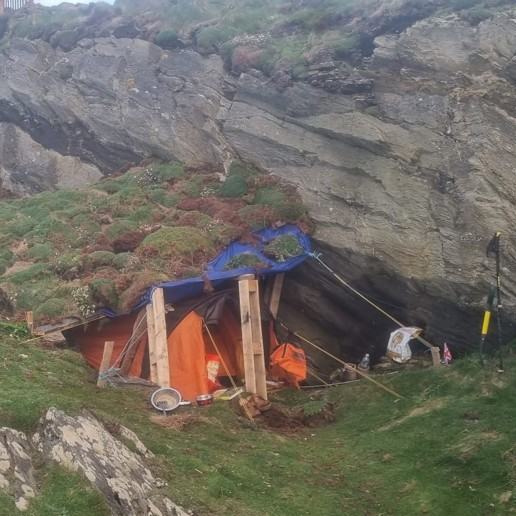
When it comes to rough sleeping, rural areas offer almost limitless possibilities for bedding down in woods and fields, on riverbanks and clifftops, in disused barns and other farm buildings. The development of apps such as What3Words that divides areas into three metre squares, each labelled with a different three-word combination, has been very helpful to locating rural rough sleeping sites. The app allows outreach workers to more easily pinpoint the location of people sleeping rough in places without buildings, road names, or other easily describable landmarks such as pubs, car parks or statues. Nonetheless, outreach workers in rural areas often still travel many miles and cover hundreds of square miles to support people who are rough sleeping, assuming they are even aware of them. Advances in affordable thermal imaging drone technology now allow outreach teams to detect potential rough sleepers over large areas that might otherwise be inaccessible. This is especially helpful during periods of flooding, when sites become inaccessible
Some teams working in rural areas have chosen to forego the need to always ‘verify’ anyone by visiting them at their sleep site overnight. Instead, outreach workers complete a daytime assessment, often by phone, and draw conclusions about someone’s rough sleeping based on their explanation and any other evidence they can provide. This way of working is in line with the government’s National Plan to End Homelessness, to phase out ‘verification’ of rough sleepers as a requirement to access support and accommodation and Homeless Link’s Principles for Rough Sleeping Outreach.
Vehicle rough sleeping and ‘lifestyle choice’
Bedding down in vehicles is a form of rough sleeping that is becoming increasingly prevalent across some areas of England. It is impossible to estimate the numbers of people who are homeless and sleeping in vehicles due to economic necessity, however, a report by Bristol local authority, which has a significant vehicle dwelling population itself, suggests that areas such as Glastonbury in Somerset and Falmouth, Launceton and Bodmin in Cornwall all have large numbers of van dwellers.
It is important to distinguish between recreation and necessity when talking about vehicle dwelling. This is not retirees who are living in motorhomes as a travel activity, ‘vanlifers’ with fitted out vehicles that are being used for travel and recreation, or the car camping of weekenders and summer visitors to coastal and rural areas. It is also important to distinguish between vehicle dwelling and Gypsy, Roma, or Travellers, who are ethnic nomadic peoples. The focus of this spotlight is anyone bedding down in cars and vans, hidden in and around their communities, due to the lack of affordable homes in rural areas. A recent Guardian article illustrates well the challenges of having to sleep in a vehicle, including extreme cold in winter, lack of cooking facilities and places to fill water tanks, and the need to constantly move on to new park ups.
It is also unhelpful that some local authorities don’t view living in a vehicle as being homeless but as a ‘lifestyle choice’ because it is happening in nature. But, as the work of Dr Michael Preston-Shoot, Emeritus professor of Social Work at the University of Bedfordshire, the evidence of people with lived experience of homelessness, safeguarding adult reviews, and research all show the ‘lifestyles’ of people who rough sleep in cars and tents are more often the result of lack of choice and in some cases even self-neglect.
When it comes to solutions, one size fits all won't work
Women
Women experience homelessness and rough sleeping very differently to men and in rural settings are often extremely hidden. This is especially true in cases of domestic violence, which many women experiencing homelessness or rough sleeping have also been victims of. It is also the case that women are often reluctant to actively seek support, whether from the local authority or other services. This makes identifying women experiencing homelessness and offering them the help and support they need doubly difficult in rural settings. But it is not impossible.
Organisations such as Encompass Southwest have demonstrated that they are most successful when they meet women where they are at in the community, rather than only offering services women need to travel long distances to.
Encompass Southwest are part of a county-wide alliance that focuses on partnership working and awareness raising, and their work includes the Brave Spaces initiative that offers community outreach, drop-in groups, and safe and secure accommodation.
Young people
National youth charity Centrepoint has indicated that youth homelessness in rural areas is rising. Young people can experience homelessness and rough sleeping very differently to older adults with many finding it difficult to access homelessness support and ending up in risky situations, rough sleeping or sofa surfing, leading to a cycle of homelessness and exclusion.
An edition of BBC Countryfile highlighted the reality of homelessness and rough sleeping for young people in rural England, where high levels of youth unemployment compounds the issue of unaffordable rural rents. An additional complicating factor in many rural areas is that any work that is available to young people is often only seasonal and low wage, which does not give young people the opportunity to save for deposits or rent in advance. Most rural areas also lack regular reliable public transport making it extremely difficult for young people to travel to work in other areas.
Organisations such as Amber Foundation in Devon and Broadacres in North Yorkshire offer vital accommodation and support to young people experiencing homelessness, allowing them to create a firm foundation for themselves as they move into their adult lives.
People who are multiply excluded
The Housing First approach has proved successful in helping people experiencing homelessness who are multiply excluded into long term sustainable accommodation. Shelter Dorset and Encompass South West have both supported some of the most vulnerable and multiply excluded people they work with to find and keep secure long term housing.
In another example of success, English Rural Housing Association have partnered with Porchlight, Commonweal Housing and Ashford Borough Council to develop a comprehensive proposal for implementing Housing First in rural settings.
Hope for more housing in rural areas
Alongside specialist support services and innovative outreach approaches for people experiencing homelessness, what is also desperately needed in rural areas is more affordable housing. Rural focused housing associations including English Rural and Broadacres are working hard to make this a reality and one way of doing this is though focusing new developments on rural exception sites. These are small parcels of land on the edge of existing rural settlements where development would be permitted of up to 20 dwellings for local residents. Residential development on rural exception sites can only be considered by the local authority for housing that will remain affordable and address local housing needs in the long-term and sustain rural communities.
This may sound straightforward, but bringing together local authority planners, landowners, and house builders to develop such schemes can be complex. However, the Rural Housing Enabler programme delivered by ACRE provides specialists help to rural communities in order to plan and deliver local affordable housing programmes on rural exception sites.
The cost developing and managing social housing in rural areas can be perceived as prohibitive. However, research has shown that this is not the case. In terms of house building, there can be additional capital investment costs that stem from a lack of pre-existing infrastructure, slow planning processes, strict environmental policies, and challenges in sourcing local materials and skilled labour. However, these are not insurmountable with the support of Rural Housing Enablers, and once built, research by English Rural Housing Association using data from 145 housing associations shows that the cost of maintaining rural social homes over time is significantly less than urban social homes. In particular, the data show that operating margins are almost double for rural social housing providers, and tenant satisfaction is over 87%.
Sources and resources
Talk To Us
