This chapter provides context for the 2025 report. It explores the different categories of homelessness and then looks at existing evidence on the numbers and distribution of people experiencing homelessness in England. The evidence is drawn from government figures on statutory homelessness and rough sleeping, published by the Ministry for Housing, Communities and Local Government (MHCLG).
2025 was a year marked by unprecedented numbers of households in temporary accommodation and rough sleeping estimates reaching a record high. This continual rise in demand is causing ripple effects through the rest of the system.
325,690 households were at risk of or experienced homelessness in 2025, a 2% decrease from 2024, and a 12% increase since 2019 when the Homelessness Reduction Act (HRA) had been in implementation for 12 months.
There was a 5% decrease from 2024 in the number of people owed a relief duty as a result of being required to leave accommodation provided by Home Office as asylum support, but an 81% increase from 2019 figures.
This includes:
-
146,370 households
threatened with homelessness within 56 days and owed a prevention duty. This is a 2% decrease since 2024, and a 2% decrease from 2019 figures.
-
179,320 households
experiencing statutory homelessness and owed a relief duty. This is a 4% decrease from 2024, and a 23% increase from 2019.
-
51,240 households
(35%) were owed a prevention duty due to the end of an assured shorthold tenancy in the private rented sector, the most common cause of prevention duty owed.
-
51,660 households
(29%) were owed a relief duty because friends and family were no longer willing or able to accommodate, the most common cause of relief duty owed.
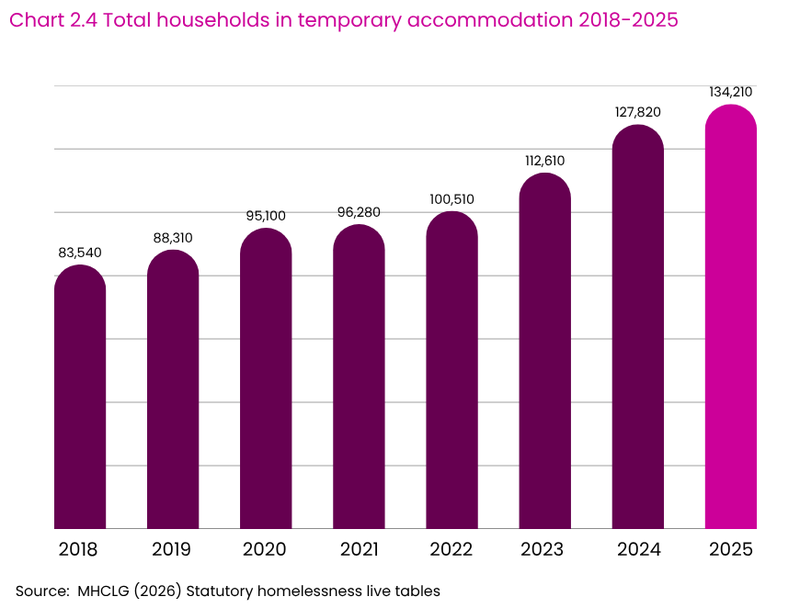
As of 31 December 2025, there were 134,210 households in temporary accommodation, a 5% increase on the previous year and 52% increase compared to 2019.
The total households in TA at the end of 2025 represents the highest number since current records began.
There was a 5% decrease from 2024 in the number of people owed a relief duty as a result of being required to leave accommodation provided by Home Office as asylum support, but an 81% increase from 2019 figures.
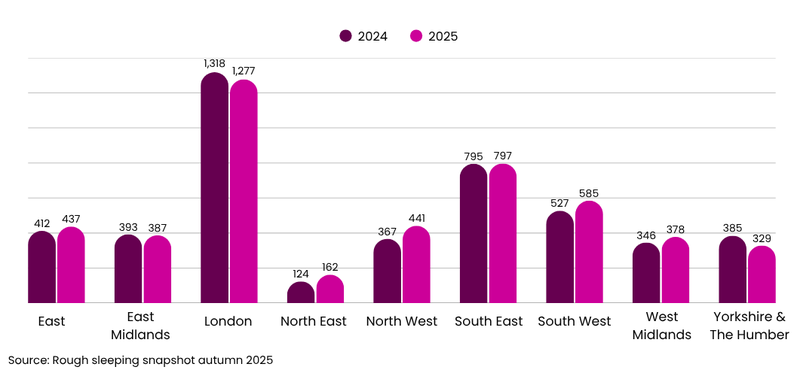
The 2025 rough sleeping snapshot found that 4,793 people were estimated to be sleeping rough on a given night, a 3% increase from 2024 and a 171% increase since 2010.
Rough sleeping increased in most English regions, expect for marginal decreases in London, East Midlands and Yorkshire & The Humber, compared with 2024.
Regional change in rough sleeping count, 2024 and 2025